The Curious Case of Cocoon: No, You Can’t Stream It All

Six years ago, Paul Schrodt (writing for GQ) lamented the fact that one of his favorite guilty pleasure films, the 1999 sports-drama Game Day starring the late Richard Lewis, was impossible to watch on any streaming platform. (I’m pleased to report that, as of December 2025, he can stream the movie on Amazon for a fee.) Schrodt doesn’t make a case for physical media over streaming subscriptions, but when a film is absent from the now massive digital media library the argument is implicit. Perhaps – and I mean no offense to Game Day, I haven’t see it – not as strongly for less successful, less important films, but certainly for those which are representative of the great American catalog. If you’re under the illusion that your favorite film will always be available with a click or two, the truth is: maybe it isn’t.

One such film is 1985’s Cocoon. Directed by Ron Howard and released to respectable acclaim and box office success (roughly $56-$57 million), Cocoon was ubiquitous for children of the Reagan/Bush era (myself included). 20th Century released the film on DVD in the early 2000s, and again on the blu-ray format in 2010. The discs quickly sold out, and remain out of print in North America today. Schrodt lists the film along with Kevin Smith’s Dogma, David Lynch’s Wild at Heart, and George Romero’s Dawn of the Dead as a startling example of “big” American films unavailable for streaming on any platform. (In more good news for him – all three are at this time.)

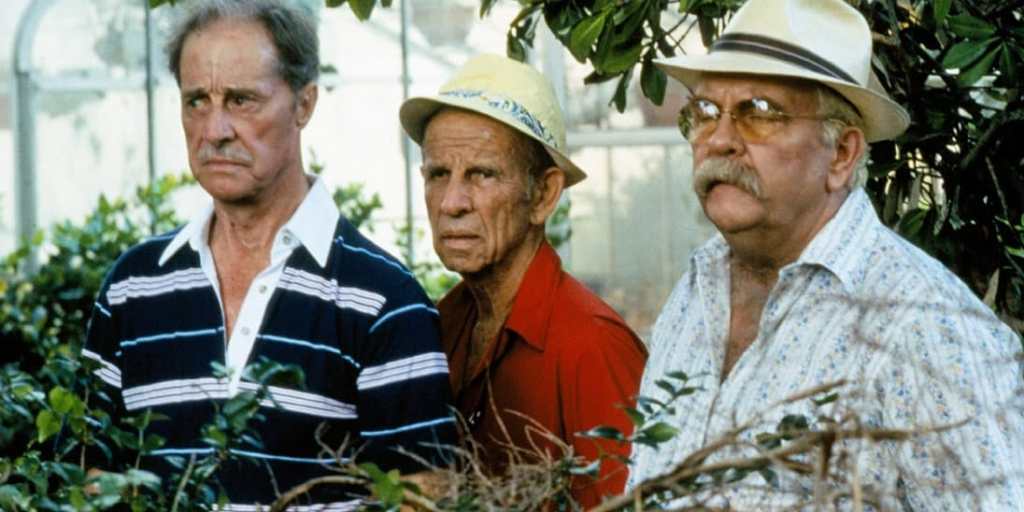
Cocoon, however, remains absent from streamers. In the years since the original blu-ray release, 20th Century has been acquired by Disney, who are not only disinterested in clearing the rights to the film for release, but generally averse to catalog releases and physical media in general. This should come as no surprise; when your business model depends on keeping subscribers engaged, you prioritize new content that will generate larger viewership – and not a 40-year-old film. Ron Howard has remained mute on the subject, though some industry insiders claim that acquiring the rights to James Horner’s score is a major barrier Disney is unwilling to tackle. I find this theory implausible to say the least. Horner’s estate (he died in 2015) has never presented much of a barrier to releasing films that he scored; even the 1983 fantasy flop Krull received a steelbook 4k release just months ago. It seems logical that Horner’s estate would want to capitalize on the film that launched a successful career for the composer, and whose re-release on streaming services and physical media would almost surely lead to further revenue. The issue must be on Disney’s end, not in the Horner corner. I am inclined to believe they’re operating on their “McRib” business model: films are kept in their archives and unavailable in order to capitalize on hype/anticipation, then released in limited quantities and for a limited time. It’s a model they used for their “Disney Movie Club” (which ended in 2024), where members agreed to buy a minimum number of DVDs/blu-rays in exchange for exclusive access to Disney films. Among them, of note, were beloved classics such as The Black Cauldron, The Absent-Minded Professor, and Swiss Family Robinson. No further physical copies of these films have been released; to view them and many more requires a monthly subscription to Disney+.

Recent news that Netflix intends to buy Warner Brothers only increases the anxiety that many academics of film (and serious film “buffs”) feel about the future of movies. It’s perhaps assumed by the general viewing population that eventually all media (print, film, audio) will be accessible digitally and instantly through a streaming service. The curious case of Cocoon and films like it puts that myth to lie. When the home video market arrived in the late seventies and early eighties, it lifted the barrier to access that had existed since the industry’s early years. Historically, all of the arts were an in-person affair. To experience art, one had to be where it was happening or make it oneself. To see a movie meant a trip to the theater, and it was expected more or less to be a one-off thing, unless the film got a re-release or you knew someone with a print and a projector. The printing press had liberated the written word, photography the visual arts, and the phonograph the world of music. Home video, in clunky BETAMAX and more portable forms as the years went on, brought the world’s catalog of films to our fingertips.

We might wonder: was it a better state for the arts, that to “experience” a painting, a song, a film required showing up somewhere? Great dinner conversation perhaps, but at this point Pandora’s box is open and tossed to the floor; we expect immediate and easy access to music, images, prose, and films and there’s no going back. But doesn’t streaming provide precisely this kind of carefree access to films? The answer may require some splitting hairs. It is easy and instant access, but is it gatekeeping in another form to keep the films behind a subscription fee? Further, to tailor the available film catalog to profitability and popularity? A thought experiment here might help. Imagine that you would like to hang Delacroix’s La Liberté guidant le peuple in your house. You can’t afford the original (and the Louvre isn’t lending it out) so you purchase a nice print and put it on your living room wall. It’s now yours to enjoy every day, conceivably, for the rest of your life. Now, imagine that all of the picture frames in your home are digital screens instead, and they’ve stopped making prints of famous paintings. You can see Delacroix’s painting on your digital screen, but it will cost you $17.99 a month. Fail to pay the fee, and your screen goes blank.

This is the heftier argument for retaining media in a physical form. Assuming a respectable durability, a film paid for once on a disc will last its owner a lifetime, to be screened over and again for no additional charge. (There’s also the matter of quality: streaming can’t offer the same lossless audio quality and high bitrate for image quality that a blu-ray can – yet.) In this sense, physical media is by a hair or two the more democratic venue for the film (and other) arts. That physical media is not good business for a streaming service, who relies on monthly subscriptions, is almost a “QED” in favor of it.

The trouble with the Netflix/Warner Brothers merger is it further ensconces the film library behind the doors of those least inclined to make them available in physical form, and leaves smaller, independent films potentially locked away potentially forever. Why release a forgotten but historically significant Cassavettes movie if it won’t amass views/advertising revenue? Presently, we have “boutique” blu-ray manufacturers like Kino Lorber, Arrow, and Criterion who will find, restore, and release some of the most obscure and peculiar films ever made, in part as a service to whatever small cadre of fans the film may have, but also as a commitment to make all of the catalog easily available to public. Without trying to sound like Kino Lorber or Arrow are preservation societies – they aren’t, they’re businesses – these and other companies like them at least recognize the value of film as a medium beyond its financial success (or even artistic acclaim/appeal).

One may suppose this is only a concern for neck-bearded fans of Tammy and the T-Rex and not for mainstream viewers, who are happy with the newest Marvel Studios content and whatever else Disney, Netflix, and Apple puts out. Historicity and fine-grained detail aren’t that important to the average viewer, goes the thinking. Similar statements were made when music went digital: that lossy formats like .mp3 were fine for most listeners and only snobby audiophiles would recalcitrantly cling to their CDs and vinyl, and in any case nobody needs a remastered CD version of MECO’s disco reimagining of the score to The Wizard of OZ.

That argument has generally proven true with films, too. If we grant the perspective that art should exist for reasons other than easy consumption any merit, though, physical media is still in the running. Take the previous example of Wild at Heart, the neo-noir film that likely has more fans than Tammy and the T-Rex but isn’t exactly fare for the typical TV watcher. For those who appreciate and study David Lynch’s films, blu-rays offer the best representation of his vision, color graded according to his design, scanned from the best source to the highest quality. The discs also offer a wealth of supplemental material from those who worked on the film, living commentary and reflection that enhances and contextualizes its historical significance. In a sense, a proper physical release of a film recognizes it as more than a piece of candy to be eaten and forgotten, a critical thing when so many films did so much more than entertain: they changed the arts, they inspired political, social, and cultural movements, their images and words became a part of the zeitgeist and are quoted and referenced every day.

Is it fitting that Netflix should own them completely and sell them back to you over and over again? Or, in the curious case of Cocoon, that some movies with substantial impact may just be forgotten and lost?

My Favorite films on physical media (2025)

Oh, the bane of “end of year” lists – the predilection of streaming behemoths like Spotify and social media staples Youtube, Reddit, and bottom-of-barrel Tiktok.

It’s 2025 and life is virtual; an artificial artifice. I am a holdout for physical manifestations of art, for the reason (primarily) that streaming services and social media are driven to please us and keep us engaged. Liked that song or film? Here’s more like it. And more like those. We’ll keep you well stupefied with more of the same for as long as you’re engaged.

Here’s a tip to the “blind buy” – that album purchased based on the cover art or the curious song titles, the film watched from good word of mouth or the review in an independent periodical. It takes a bit of courage (especially in this era of austerity) to make an investment in something that you may not like. But what a reward to find something that changes your perspective, thrills you, inspires a new line of thought.

To that end, here are some films I watched this year that proved a worthwhile sacrifice of money and time. (These films weren’t necessarily released in 2025, indeed most of them are much older.)

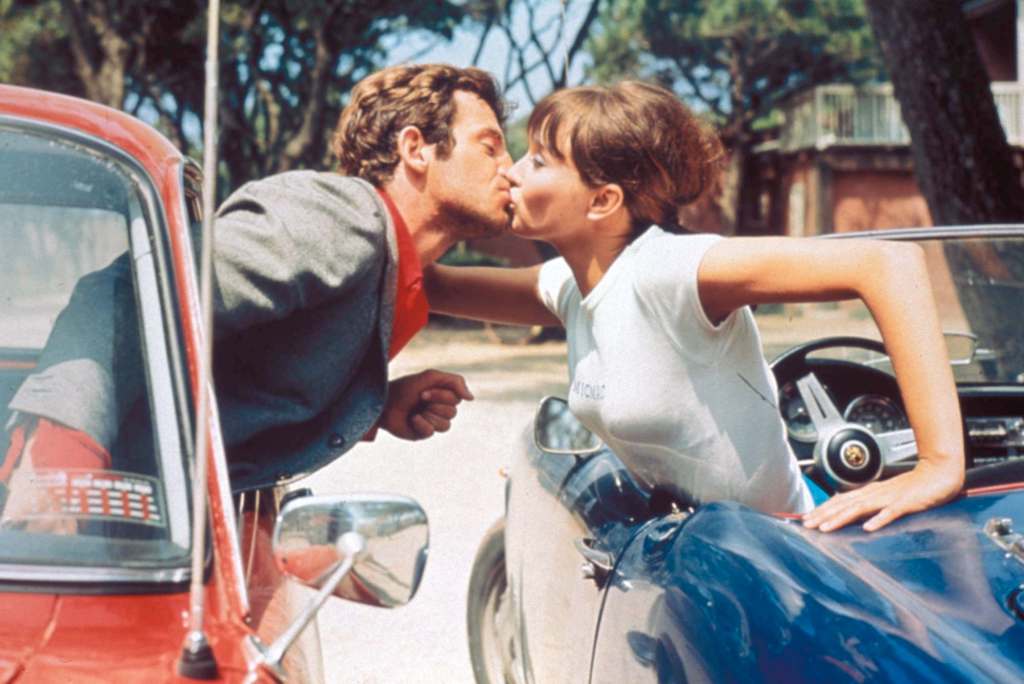
1. Pierrot le fou (Jean-luc Godard, 1965). A crime film, a drama, a romance, and a smidge of road trip all wrapped in one giant “nouvelle vague” package, Jean-Luc Godard’s Pierrot le fou (“Pierrot the Fool”) dazzles with its obstreperous color palate and frequent deployment of explosive imagery. The plot in a nutshell: a married intellectual flees a failing marriage and pursues a romantic relationship with his ex, Marianne, herself on the run from organized crime. High drama, betrayal, and death ensue in the expected French fashion.

Godard breaks up normal scene transitions with a third and often foreign shot. There’s textual foreshadowing and brazen camera work to punctuate Godard’s metanarrative against sexism and consumerism. It’s a unique and thrilling capsule of the artistic styles of France in the 1960s and boldly directed. I watched it in a beautiful 2k restoration offered by The Criterion Collection on blu-ray. As appropriate to its New Wave style, colors pop and the film grain field is healthy and unobtrusive.

Audio for this particular release is a clean mono, as stereo recording was still another ten years off or so. This was my first Godard blu-ray but it won’t be my last.

2. Marquis de Sade: Justine (Jess Franco, 1969). It’s hard to rank Jess Franco‘s films because 1) there are so many of them, and 2) they’re mostly bad. A general consensus would put The Girl from Rio, Succubus, Venus in Furs, and Eugenie near the top. But fans of the Spanish schlock-horror-erotic filmmaker might have their own favorites, and so Ilsa the Wicked Warden, Vampyros Lesbos, The Diabolical Dr. Z, or Lorna the Exorcist might just as well make a top five list. He was never mainstream enough to face professional critical analysis, but enjoys a healthy cult following.

I decided to watch my first Franco film this year, and chose Marquis de Sade: Justine because it was his highest budget film at the time (which is to say, still not much) and I was curious to see how Franco approached a key piece of French literature (which is to say, not well). In Franco’s defense, any literal translation of the Marquis de Sade’s Justine ou Les Malheurs de Vertu to film would earn an MC17 rating or face accusations of being a snuff film. Franco was afforded more latitude as a European director than an American counterpart would have been, and benefitted from his status as mostly “underground” in his art. But what’s missing from Franco’s film is the requisite level of social criticism that de Sade intended in his novel. Italian director Pier Paolo Pasolini did it better with his reading of de Sade’s 100 Days of Sodom.

Without much for a basis of comparison, I enjoyed Justine for what it is. Franco is handed some gorgeous scenery in his native Spain and the rescan of the original camera negatives on the 2023 Blue Underground 4k blu-ray release looks very good, with an even film grain and no apparent sign of wear/damage. Others have said that Justine is not Franco’s best film, but it may well be his best-looking. When Franco lacked the resources of a major Hollywood film, he compensated with creative shot composition, bold color, and careful use of shadow to hide limitations (and a glut of quick zooms). This was a worthwhile introduction to his work, though I can’t imagine myself seeking out more than a handful more of his films and calling it a day.

3. Days of Heaven (Terrence Malick, 1978). Fraught with production problems and notoriously disorganized according to cast and crew, Days of Heaven eventually earned acclaim after its time, and became a defining film of the 1970s. What works here is Malick’s vision and extensive use of the “golden hour” period just before sunset. Shot in Canada (despite being set in Texas), the film exhibits some of the finest cinematography of its time. Proceedings are aided by convincing performances from a young Richard Gere, Brooke Adams, Sam Shepard, and Linda Manz – all of whom help overcome what’s otherwise a rather unimpressive plot. Malick was a distant director but, at least, meticulous with planning the visual style of the film and it’s evident here.

I watched the film on another Criterion Collection blu-ray, and suffice to say it’s near reference quality. The color timing and balance of a new film scan is always critical and this beautiful 4k preserves Malick’s vision.

Audio is a clear Dolby Digital 5.1 track, no stereo option (how the film would have been released).

4. Manhattan (Woody Allen, 1979). Let’s dispense with the controversy off the bat: yes, this is an accused sexual predator making a film about a middle-aged man dating a seventeen-year-old girl. I’m going to lean on the “love the art not the artist” wall here and argue that Manhattan is a great film, all other considerations aside. In fact, I think it’s his best (no shade toward Annie Hall, which is also a good film). It has in its favor some inspiring filmmaking choices: to film in 2:35.1 widescreen, in black and white, and in the iconic locales of the titular city. The late Diane Keaton absolutely dazzles as always, and Miriam Hemingway does wonders with what must have been a very challenging role to play.

Only a 2012 blu-ray exists of the film, and given his great fall from favor none of Allen’s films are likely to receive new scans in 4k any time soon. The existing blu-ray is quite good, especially in striking the right balance of whites and darks, and the “filmic” look overall. Too many films have received digital processing for a physical release, notably digital noise reduction to reduce film grain and edge enhancement to make things look “sharper.” My view: films made on film don’t need to be altered to look more “modern.” A good restoration aims simply to present the film as it looked upon release in the best possible quality.

Audio for this disc is a clean and clear Dolby 2.0 mix – but since this a Woody Allen film, it’s mostly dialogue and there’s no need for a fancy surround sound mix.

5. Police Story (Jackie Chan, 1985). Hands down the best martial arts film of the 1980s, and perhaps of all time, Police Story is a stunt action fever dream. Roger Ebert called Chan’s approach to filmmaking “unholy dedication” to the craft, and I doubt many directors or stars are as willing (and able) to risk their very lives for the sake of a great shot. And, as is well documented elsewhere, Chan did indeed suffer multiple injuries during the many elaborate action set pieces that make up the film. The story and characters are just about forgettable, but Chan never wanted to make them anything more – his vision was to delight and amaze with increasingly dangerous practical stunts, and here he succeeds beyond measure.

Police Story was shot using Arriflex cameras on 35mm stock. The Criterion Collection blu-ray I watched (part of a set featuring this film and Police Story 2) used the original camera negatives in a 4k scan to produce a very good rendering of the film. Film grain is intact, no obvious damage or dust/scratches are noted, and – importantly – the color has been rebalanced to remove an odd brown hue found in previous releases on DVD.

6. The Virgin Suicides (Sofia Coppola, 1999). In her directorial debut, Sofia Coppola aims to deconstruct adolescence, memory, and suburban life. This is a film of contrasts: bright, blonde hair, golden summer days – all overshadowed with a pall of lament. Coppola went on record at the time that she wanted the film to explore what time does to things that once seemed monumental and permanent. It was received with good reviews at the time, though many noted it was disarmingly light for its depressing subject matter. By no means had Coppola made a perfect film and, with 26 years of distance, it almost does seem too casual. Other critics have noted that female suffering is somewhat trivialized by the male-dominated perspective the film takes, which is fair I suppose but maybe that was Coppola’s intent. We learn very little of the inner lives of the Lisbon sisters, and what led them to their self-demise. That suicide is infectious – and there’s a lot of it in this movie – Coppola gets right, and she nails the message that memory is fickle. Years after events, the Lisbon sisters are nothing more than an imperfect footnote. Yet, as the credits rolled I was left with a feeling that Coppola had made a nascent filmmaker’s error: too much style, too little substance.

The Virgin Suicides was shot on 35mm but used a special processing technique called a bleach bypass, which by skipping or shortening the bleaching part of film development leaves a black and white image on top of the print. This creates a desaturated color palate but stronger blacks and greater contrast. Color saturation can be adjusted after the print is struck. I recall seeing the film at the time of its release and feeling the saturation was low, and whites were somewhat blown out. The Criterion Collection edition features a new 4k scan color graded by Sofia Coppola and cinematographer Ed Lachman. There has been some tweaking done to re-grade certain scenes, and I think saturation overall has been turned up. As much as I think I subtler color grade is a better filmmaking choice, it’s their film and this is what they want us to see. On the bright side, the contrast has been turned down and whites are clearer, with more detail visible where previously it was not.

The film also features a very nice Dolby DTS 5.1 sound mix.

7. Insomnia (Christopher Nolan, 2002). After he’d done Memento but before he’d directed The Dark Knight, Christopher Nolan made the only film of his career (to date) that wasn’t written by him. It’s partly for that reason I chose this film for my list over Memento, which is a superior film. I wanted to see what a Nolan film not written by Nolan is like. The other reason is that Nolan shot Insomnia on 16mm film and chose not to edit it on a digital intermediary.

Films made from more or less 1998 – 2006/2007 tend to be the worst blu-ray releases, because Hollywood was in the process of transitioning from film to digital filmmaking. The vast majority of film of this era were shot on 35mm film stock at high resolution, then the negatives scanned to be edited digitally on a computer (for shot composition/special effects, and so on) creating a “digital intermediate,” and finally the digital final product was printed on to 35mm film stock to be sent to theatres (who didn’t have digital projectors, yet). In its digital intermediate (or DI) form, the highest resolution possible given computer processing speeds and storage limitations of the time was 2k, the resolution of a standard blu-ray. What all this means is that for most of these films the “best” version that exists in an accessible form is either the digital intermediate or the 35mm print of the digital copy. A digital intermediate will look good enough on most TVs, but poorer as the screen size increases. Digital upscaling that adds artificial detail to simulate a high definition look is possible, but comes with its own set of issues.

“But wait!” you may say. “What about the original 35mm negatives?” And you would be correct – if the filmmaker/studio kept the camera negatives, they could be rescanned at higher resolutions to create 4k/ultra high definition digital files. But that’s very expensive. Additionally, that just leaves you with a new digital copy of the film stock, and ALL of the shot sequences, transitions, digital effects, and tweaks made using the first DI would have to be redone and recomposited at the higher resolution. That, too, is very expensive. Only a handful of films made at this time have done it (Peter Jackson for his Lord of the Rings trilogy, for example), and only because the studio calculated that they would recoup the expense in digital/physical media sales. Even studio giant Disney hasn’t bothered with some of their most popular franchises; the Harry Potter films, for example, exist in high definition only as an upscale of their digital intermediates. For smaller, independent films, any money spent would likely be a loss. (I would like to point out one exception: 2001’s exceptional French thriller Le Pacte des Loups, which was restored by StudioCanal by literally scanning the camera negatives at 4k and then rebuilding all of the effects shots from scratch to create a brand new ultra high definition version of the film. It was a labor of love.)

That’s a bit of a digression, but it does underscore Insomnia‘s interesting place in the Hollywood catalog and underscores his traditional approach to filmmaking. He continues to use film over digital cameras, prefers practical effects, and does his color timing/grading using film processing techniques rather than digital tools. He’s also well-known for a rigid filming schedule and employing a single unit production team so he’s involved in every aspect of the finished product.

How does all this translate to Insomnia? Primarily, that the film looks better than many of its contemporaries. The 16mm film stock I mentioned earlier punches in terms of color vibrancy and depth, although this is a film shot in Valdez, Alaska so the palate is dominated by blues and whites. Image clarity is surprisingly good. Nolan employs many of the tricks he would go on to use to success in later years here: the increasing dramatic tension, natural lighting and hand-held camera work, location shooting over studios. There’s subtle questions about the effects of time on consciousness, a subject that Nolan has explored in his other films. The story moves at a less than brisk pace, but Nolan is able to wring such great performances from Al Pacino (who hasn’t really turned in a great role since) and Robin Williams as the bad guy (!) that some narrative fatigue is forgivable.

I watched the single disc blu-ray that’s currently the only physical media format of the film available. This is a film that would look great in 4k, and for all the reasons I adumbrated above it should be an affordable upgrade. But the blu-ray as it is offers a smart rendering of the film. A Dolby DTS 5.1 audio track makes great use of surround sound to make big spaces smaller, and create suspense in the film’s many hushed moments.


We may or may not be approaching the death of physical media. Sales of DVDs/blu-rays/CDs are all down, no doubt. Books fluctuate while vinyl records are enjoying a bit of a revival. At least for now, the quality of films on blu-ray over streaming gives physical media the edge. I have great disdain for the idea of giving streaming services $20 every month for films that can disappear when rights expire. It’s a losing battle (just this week it was announced that Netflix will acquire movie studio Warner Brothers) and streamers will do all they can to shut down physical releases so we’re forced to pay their ever-increasing fees.

“For a philosopher to say, ‘The good and the beautiful are one,’ is infamy; if he goes on to add, ‘also the true,’ one ought to thrash him. Truth is ugly. We possess art lest we perish from truth.” Nietzsche, Will to Power; Section 822.