
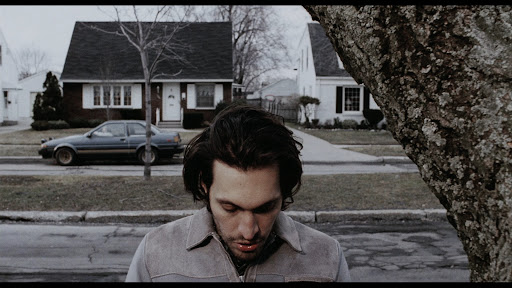
In a cinematic universe of unlikeable leads, there’s a special spot for Vincent Gallo’s Billy Brown.
Buffalo ’66 is a 1998 romance-drama, working poor fringe film, arthouse black comedy, starring Vincent Gallo (who also wrote and directed) and Christina Ricci. I recently watched the film for the first time. Below is a plot synopsis with spoilers – jump below the cut for the review proper.
Story Summary
The film opens on Billy Brown receiving his discharge from prison. He stumbles around, lost in Buffalo New York’s freezing clime, looking for a place to pee. He phones home, where a distracted mother inquires after his wife and government job (he has neither). His folks are clearly unaware that Billy took the rap for a crime he didn’t commit in order to pay off a significant bet to his bookie. (He bet on the Bills to win the Superbowl in 1966, and lost.) His mother entreats him to come home, and he caves and agrees to visit them for dinner that evening. Of course, he’ll need to set up a ruse of being married and successful for his parents, so he abducts a young girl young – Layla (Christina Ricci) – from a local dance studio and threatens to kill her if she doesn’t pretend to be his wife.
Surprisingly, Layla takes to the role with gusto and stages a convincing performance as the doting spouse. It’s clear from their arrival on that Billy’s parents are a mess. Billy’s father, Jimmy (Ben Gazzara) is quickly enamored with Layla but in a rather pervy way; his mother Jan (Anjelica Huston) likewise approves but is too disinterested in Billy to offer much of a response. We see her distracted entirely by a replay of the ’66 Superbowl game, and infer that football is much more interesting to her than her son. Jimmy frets over giving Billy too much tripe for dinner, and in flashbacks in-screen we see him shoot the young Billy’s dog for urinating on the floor.
For his part, Billy blames the Superbowl loss that tipped his fate toward the stir on fictional Buffalo Bills kicker Scott Woods (Bob Wahl), who fumbled a field goal that could have kept the team in the game. Another round of flashbacks show the fated moment when Billy chooses to take the fall for a gangster in order to save his family, and Billy during a prison visit with his best friend “Goon” (Kevin Corrigan) showing him how to mail cards and letters monthly so that his parents believe he’s simply indisposed and not incarcerated.
After dinner, Layla accompanies Billy to a bowling alley. She tries to get him to open up and makes a few attempts at physical affection; Billy responds with anger and rebuffs her advances. He’s too concerned with past glory on the lanes and a girl he loved a long time ago in high school, Wendy Balsam (Rosanna Arquette). While Billy ruminates, we get a lovely tap dancing solo from Layla to the unlikely tune of King Crimson’s “Moonchild.” It’s a mesmerizing aside with elegant if not accurate syncopation to the delicate cymbal taps in the song. Billy excuses himself calls Goon to share that he’s decided to kill Scott Woods as payback for inadvertently putting him in jail. (Conveniently, there was a loaded pistol in his alley locker.) He plans to get the deed done at the now-former football star’s strip club downtown later that evening.

Billy and Layla depart for a local diner as Layla has a craving for hot chocolate. While they’re waiting for their drinks, Wendy Balsam and her husband sit at an adjoining booth. She recognizes Billy from high school but mockingly recalls him off as a nobody who tended to follow her around and pace outside her bedroom window. Billy is mortified by the slight and leaves with Layla for a local hotel. Billy wants a hot bath, and it turns out Scott doesn’t get to his club until after 2AM, so they have time to kill.
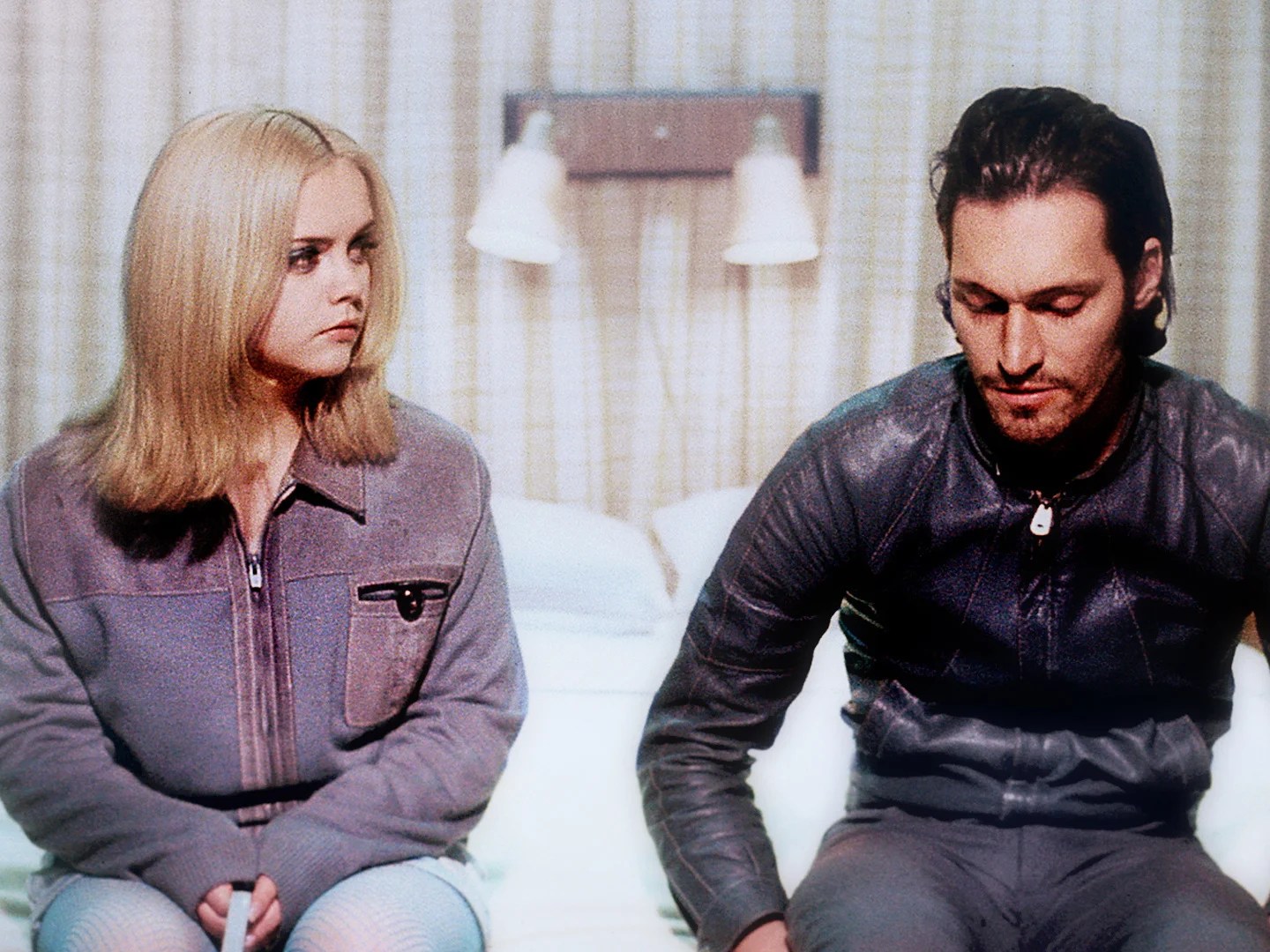
Billy frets over a room with two beds but none are available. They settle into their room, and Layla confronts Billy about Wendy, whom Billy had previously portrayed as an ex-girlfriend. He admits to being more or less an outcast in high school and that he only entertained daydreams of dating Wendy. Layla offers herself to Billy but he refuses, stating that he doesn’t like to be touched and just wants solitude. She somehow convinces him to let her join him in the wash room while he bathes, and ultimately ends up in the tub with him. They lay on the hotel bed, and he allows her to hold his hand.
Billy explains that he wants to go out for a coffee and promises to return. He crosses the street to Scott’s strip club and enters. A striking slow-motion sequence set to Yes’ “Heart of the Sunrise” follows, where Billy ostensibly crosses the crowded showroom and shoots Scott (drunk, overweight, and accoutred with a bevvy of strippers, in the head, then turns the gun on himself. He pulls the trigger and scene fades to white. It’s a misdirection, however. The sequence only occurred in Billy’s imagination, and when we return to the real world, he instead beholds Scott with a twinge of pity then turns and leaves the club, tossing his gun into an alley.
He goes to a bakery (inexplicably open at 2am) and buys coffee, a heart-shaped cookier, and hot chocolate; his demeanor has changed and he talks to the owner about having a girlfriend and being in love. He’s smiling and even buys another patron a cookie in celebration of romance. He returns to Layla and they, presumably, live happily ever after.
Review
I read a few critical responses to Buffalo ’66 before crafting my own. Roger Ebert pointedly described the film as “a collision between a lot of half-baked visual ideas and a deep and urgent need.” He also added, significantly, “That makes it interesting.” That’s a strong starting point for any review of this film, which succeeds in design where it falls flat in execution. I don’t think the visual ideas are “half-baked;” it not wholly original they are at least effective. In other words, what worked here for me was Gallo’s style. Camera work is heavy-grained and suitably gritty with a very limpid color palette throughout. Only Layla’s blue/green dress adds much in the way of vibrance to a story that deserves mostly hum-hues in any case. That’s the right choice for a movie set in Buffalo and whose characters are so grim. The reversal stock used to film lends the right balance of saturation and color saturation that gives the film an almost-sixties aura.
There are some finely framed shots in the film and sage decisions about where and when to use flashbacks. Camera perspectives from high above in the early moments of the film underscore how lost and small Billy is just out of jail. And the two-shots, of which there are ample, bring out nuances in the Billy/Layla dynamic that the simple dialogue fails to capture.
Buffalo ’66 had a few things working against it even before I watched it. For a start, it’s well known that Gallo was 36 years old during shooting while Ricci was barely 17. Accepting that it’s not always necessary to view older films through modern sensibilities, this is still an uncomfortable age gap given how brutal and pugnacious Billy is toward Layla in the first half of the film. Things are mitigated slightly by Billy’s apparent aversion to physical touch, so the amount of contact between the actors is mercifully small (the bathtub scene remains a tad icky).
Second, behind-the-scenes accounts of Gallo’s directorial approach paints him as more or less like Billy himself – prone to mood swings, demanding, and at times insulting. That’s a lot to throw at a 17 year old just getting started in her acting career. Gallo’s demeanor following the film’s release only makes the matter worse: he describes Ricci as a “puppet,” a “c*nt,” and an alcoholic, among other things. He comes across as a little unhinged, and in many interviews dismisses his cast and crew out of hand. He’s well known to make provocative and inflammatory comments. In fine, Gallo is a polarizing figure who’s had his share of approbation and scorn, with Ricci in this case notably stating he was a “lunatic” and vowing never to work with him again. I did try to set that perception aside and judge the film on its own, but it’s hard not to see a lot of Gallo in Billy.
On the acting in the film – performances are strong from the experienced cast; Anjelica Huston makes it easy to loathe Billy’s mother and Rosanna Arquette does a lot with a tiny amount of screen time. Gallo himself actually elicits a modicum of sympathy for his character. Sure, Billy is a scumbag and an insufferable dimwit, but he never had much of a shot in life did he? Unfortunately for Ricci and for us, Ricci gets too little to work with for her to turn in anything other than a satisfactory performance. Layla’s lines are few and far between. Ricci gets too little to work with here, which is a shame. I wanted to understand desperately what led this young girl to so easily fall in love with a man who kidnapped and threatened to kill her. One supposes she has some trauma in her past as well, but we just don’t know. And I can’t help but wonder if centering the lead male character to the great expense of the female lead doesn’t somehow reflect Gallo’s own bias and a poor perspective on women in general.
The film’s setup is promising if the delivery is never quite there, but ultimately the film meets its doom in the denouement. As the rattling chords of the most unlikely Yes song to ever end up in a film played, and Billy pointed the gun at his own temple in the night club, I felt a moment of catharsis: this wasn’t a happy ending, but it was the necessary one. Not all stories of trauma and loss end with a tidy restoration; this was, I thought, a wise choice. But it wasn’t to be, and the drastic change in Billy’s personality, the sudden happy conclusion after the fake one – it simply doesn’t work. It negates just about everything we’ve seen before it with a hand-wave: all is well, all is forgotten and forgiven. I could have accepted a compromise where Billy shoots Scott and ends up back in prison, but this ending just isn’t earned – not by the story, not by the characters, and certainly not by the logic of human behavior.
I’m awarding the film a 5.5/10. It’s worth seeing once. Gallo has a unique and admittedly engaging style, and he gives us characters that are, above all, interesting if not fully flushed out. It’s quite frustrating because a few minor tweaks could have made Buffalo ’66 the masterpiece its cult-followers claim it to be.

 Official Website of Jace Paul
Leave a comment